Construction & special designs
Plate Flanges
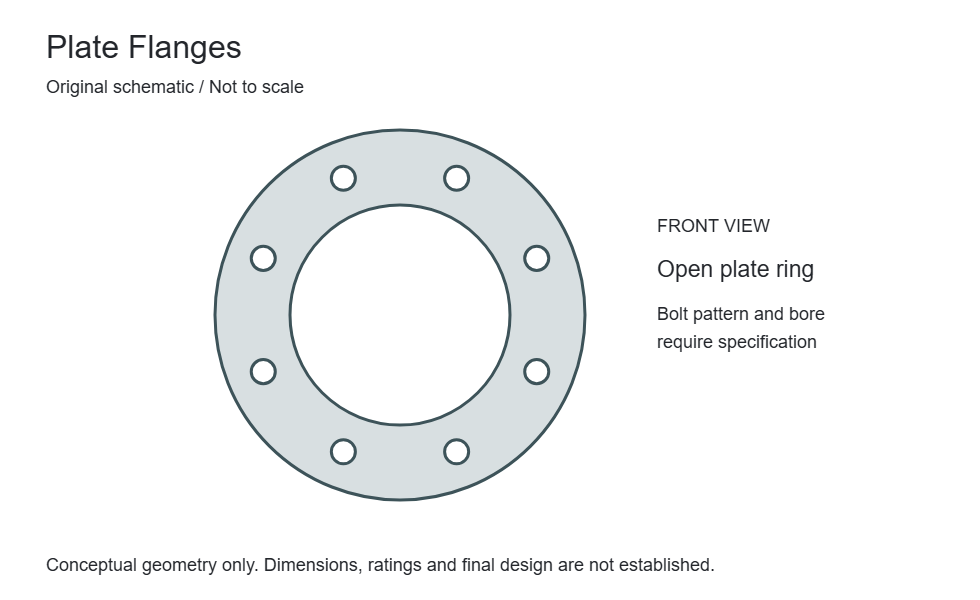
A plate flange is a ring-shaped component made from plate, with an open bore and a bolt pattern specified for the mating connection. Plate construction is distinct from a flat gasket facing.


Construction & special designs
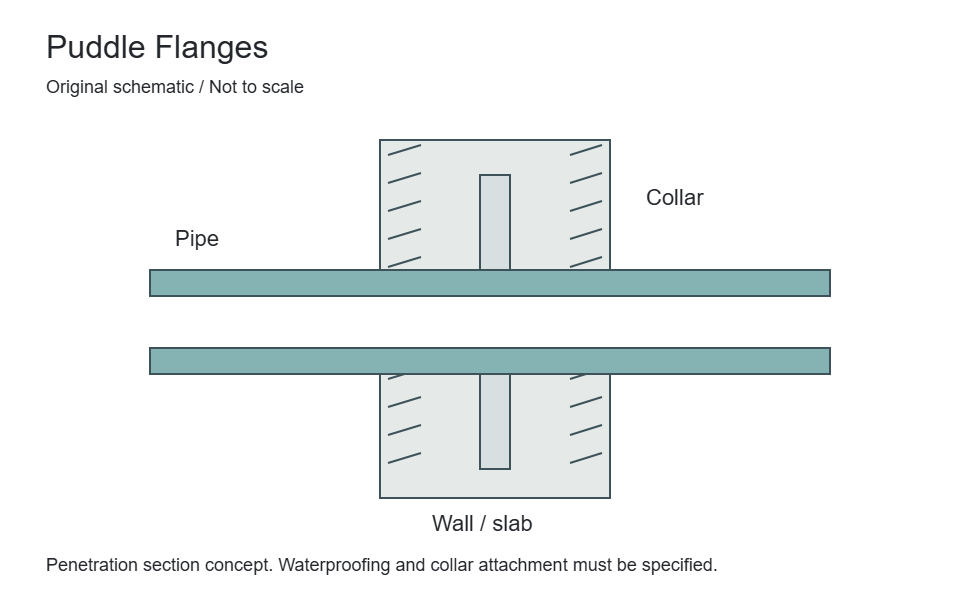
A puddle flange is a collar arrangement at a pipe penetration through a wall or slab. It addresses the path around the outside of the pipe rather than a conventional bolted pipe joint.
Identify whether the requirement is a welded metal collar, a mechanical collar or another specified waterstop system. The pipe, collar attachment and surrounding construction form one installation detail. A puddle collar does not establish the pressure rating of the pipe or guarantee a watertight installation by itself.
Compare flange typesProvide wall or slab thickness, collar position, pipe material and the specified embedment or sealing arrangement. Installation and waterproofing requirements must be agreed with the relevant project designer.
For a welded metal collar, specify the weld and inspection requirements. Mechanical or elastomeric systems need their own approved assembly detail and must not be substituted on appearance alone.
Define Puddle Flanges as part of the complete joint. These fields identify required engineering data; they are not universal dimensions or a declaration of available sizes.
| Parameter / designation | Technical information | Selection requirement |
|---|---|---|
| Nominal size and bore | State the nominal connection size separately from the actual bore or pipe outside diameter. | A matching size label does not establish matching internal geometry. |
| Outside diameter and thickness | Identify the finished flange diameter, minimum thickness and any hub or collar projection. | Include the drawing datum and units for replacement measurements. |
| Bolt circle and holes | Record pitch-circle diameter, hole quantity, hole diameter and any special orientation. | Check against the mating flange; do not infer a bolt pattern from pressure class alone. |
| Gasket-contact surfaces | Specify face form, seating dimensions and surface finish on the assembled joint. | Include gasket designation; a visually similar surface is not evidence of compatibility. |
| Pipe-side interface | Identify weld preparation, socket, thread, collar or other attachment geometry as applicable. | Provide pipe schedule/wall thickness and the connection-specific standard. |
| Design conditions | State design pressure, minimum/maximum temperature, fluid and mechanical loads. | Pressure class is not a pressure value in bar or psi. Use the material-specific rating basis. |
Compare Puddle Flanges with the related forms or references below. A related product is not necessarily a permissible substitute.
| Related product / reference | Distinction | Check before selection |
|---|---|---|
| Plate Flanges | A plate flange is a ring-shaped component made from plate, with an open bore and a bolt pattern specified for the mating connection. Plate construction is distinct from a flat gasket facing. | State the plate specification, grade and thickness |
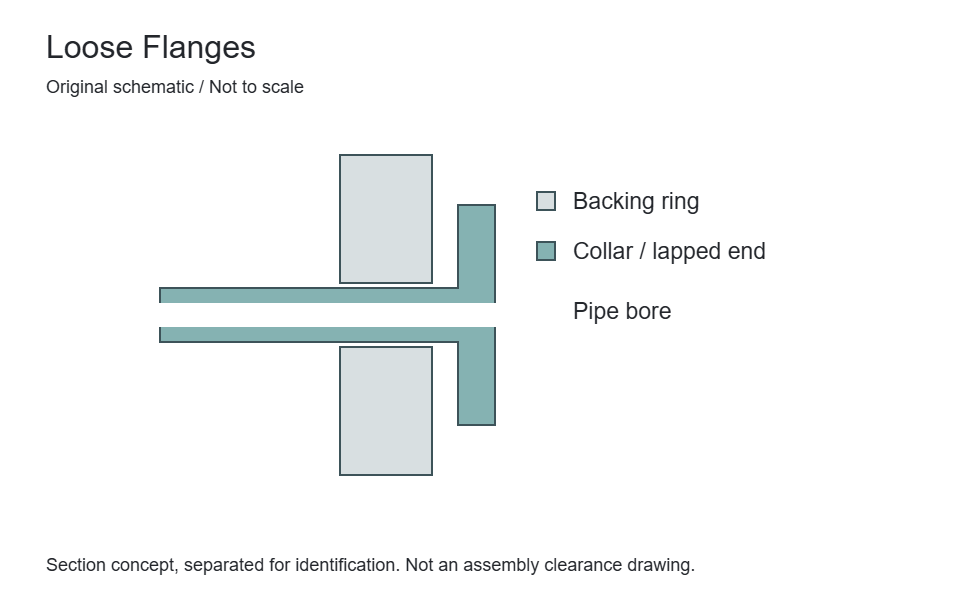
| Loose Flanges | A loose flange is a separate backing component working with a collar, lapped end or stub end. It transfers bolt load while the companion component forms the pipe-side seating interface. | Collar or stub-end designation and drawing |
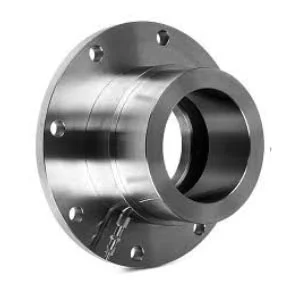
| Companion Flanges | A companion flange is selected to mate with a particular flanged connection. The term describes its role in an assembly, so the actual connection form and dimensions must be identified. | Provide equipment drawing or flange designation |
Define acceptance requirements for Puddle Flanges in the purchase order. Required examinations and documents depend on the material, design and project specification.
| Review stage | Information to confirm | Order requirement |
|---|---|---|
| Material identity and traceability | Specification, grade, heat/lot identification and the required material certificate. | Agree documentation and marking before manufacture; visual appearance cannot verify alloy identity. |
| Dimensional verification | Critical dimensions from the selected standard or controlled drawing. | Identify inspection points, tolerances, units and drawing revision. |
| Surface and end condition | Gasket-contact surface, attachment end, edges and any coating exclusions. | State finish and visual acceptance criteria; agree protection of machined surfaces. |
| Supplementary examinations | Any specified PMI, NDE, hardness, impact, corrosion or other tests. | Define the method, sampling and acceptance criteria; tests are not automatically included. |
| Assembly compatibility | Adjoining components, weld or mechanical interface and project service conditions. | Design approval and correct assembly remain separate from a dimensional inspection report. |
| Packing and order release | Quantity, identification, surface protection, documents and delivery destination. | Agree preservation, packaging and release requirements with the order. |
Specification checklist
Availability, dimensions and pressure-temperature suitability are confirmed against your complete enquiry.
| Item | Requirement |
|---|---|
| Penetration | Pipe outside diameter, material and wall/slab thickness |
| Collar | Construction, outside diameter, thickness and position |
| Attachment | Welded or mechanical arrangement and inspection requirements |
| Environment | Waterproofing detail, exposure, coating and installation specification |
| Material & quantity | Exact material designation, quantity and required certification or inspection documents |
Application context
Related connections
Construction & special designs
A plate flange is a ring-shaped component made from plate, with an open bore and a bolt pattern specified for the mating connection. Plate construction is distinct from a flat gasket facing.
Mechanical connections
A loose flange is a separate backing component working with a collar, lapped end or stub end. It transfers bolt load while the companion component forms the pipe-side seating interface.
Mechanical connections
A companion flange is selected to mate with a particular flanged connection. The term describes its role in an assembly, so the actual connection form and dimensions must be identified.